When people visit Phuket, they often look for something special to take home. A souvenir that reminds them of the island, a piece of art for their home, or something they won’t find in every other shop.
But there is another reason to visit Phuket Art Village in Rawai.
Here, materials that might otherwise be thrown away can find a new life in the hands of local artists. Old wood, discarded cardboard, metal, fishing ropes, stones and other unexpected materials become sculptures, characters and colourful works of art.
I’ve lived in Phuket for 16 years, and Rawai has been my home for the last 13. As an artist myself, I love being surrounded by people who see possibilities where others might see something with no value left.
For me, Phuket Art Village is not just a place to discover local art. It is also a reminder that small choices can make a difference — including the way we shop, decorate our homes and support the people in our community.
What If We Looked at Waste Differently?
We all know that reducing waste is important. But recycling doesn’t always have to mean putting something into the correct bin and hoping it will be processed properly.
Sometimes, a material can be given a completely different purpose.
A piece of driftwood can become a sculpture. An old piece of cardboard can become part of an expressive composition. Stones, metal plates and fishing ropes can be transformed into something unexpected.
This is one of the things I find so interesting about the artists at Phuket Art Village. They don’t simply use conventional art materials. They look at objects around them and imagine what else those objects could become.
The result isn’t always polished or predictable. Some pieces are funny, some are strange, some are colourful, and others make you stop and look twice.
That is part of their charm. Each work has its own character, and you can often recognise the materials that were used to create it.
Instead of hiding the past of an object, the artist makes it part of the story.
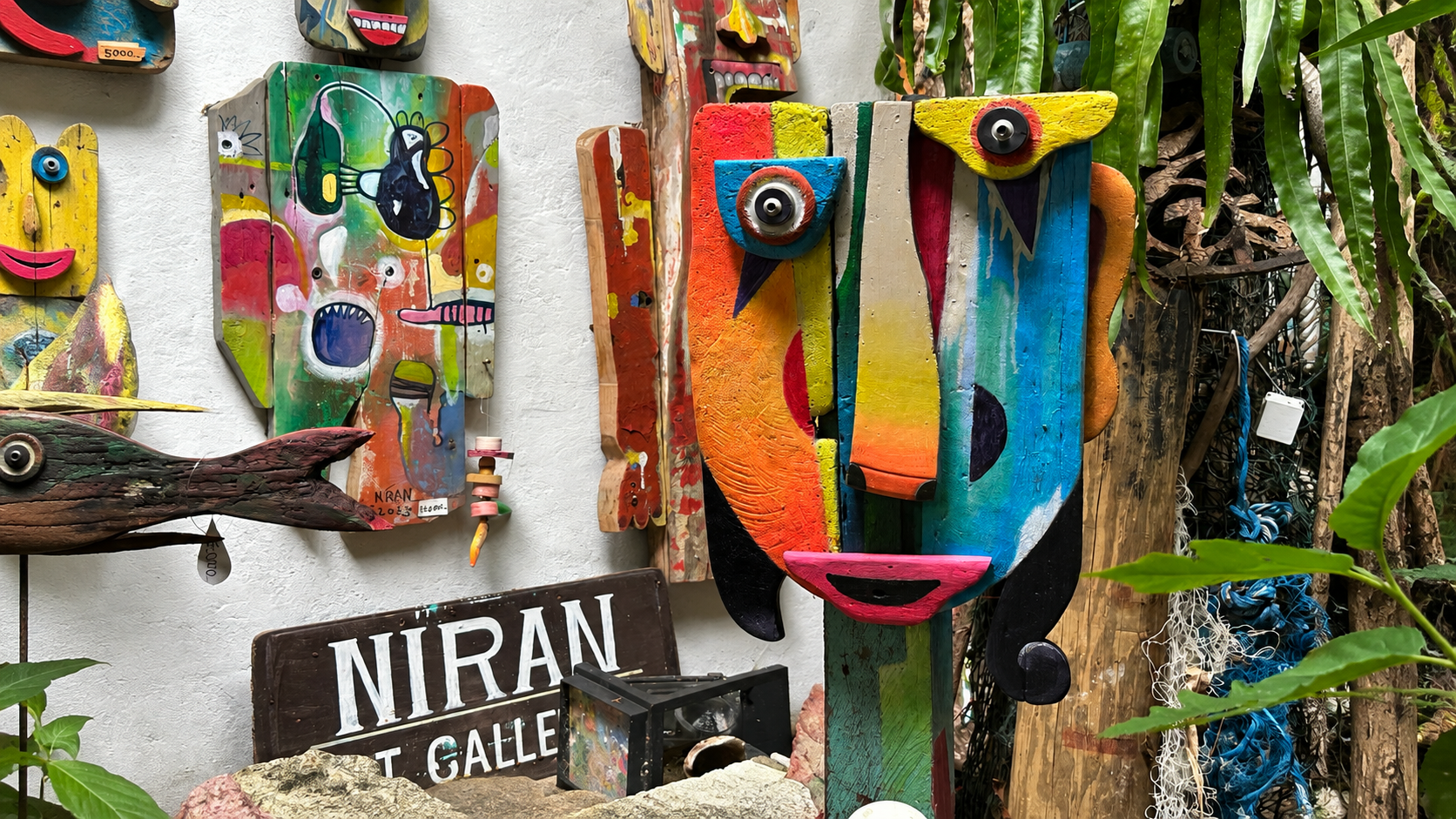
Niran: Giving Driftwood a New Life
One of the artists I want you to discover is Niran.
Niran creates imaginative compositions from wood and other materials, turning them into colourful fish, expressive faces, animals and playful characters. His work has a personality of its own. You might see a fish with an unexpected shape, a face that seems to be watching you, or a sculpture that makes you smile before you’ve even realised why.
Look closely at his work and you’ll notice how different materials come together. Pieces of wood become bodies, faces or fins. Different shapes and textures help give each creation its identity. Paint adds colour and expression.
What I particularly like is that these works don’t try to look like something mass-produced. They have an individual character, and the materials are part of what makes them interesting.
Niran’s art has also found a place beyond the village itself. Local cafés and other businesses support his work by displaying his pieces in their spaces. A sculpture can become part of the atmosphere of a café, something customers notice while having coffee or meeting friends.
It is a lovely example of how supporting a local artist can benefit more than one person. The artist gets an opportunity to sell his work, a business gains a distinctive decoration, and visitors get to enjoy something original.
Tourists buy Niran’s creations too, taking them home as reminders of their time in Phuket. I like the thought of one of his colourful characters travelling to another country and finding a new home far away from Rawai.
It is a different kind of souvenir — one with a story about the person who made it and the materials that became something new.
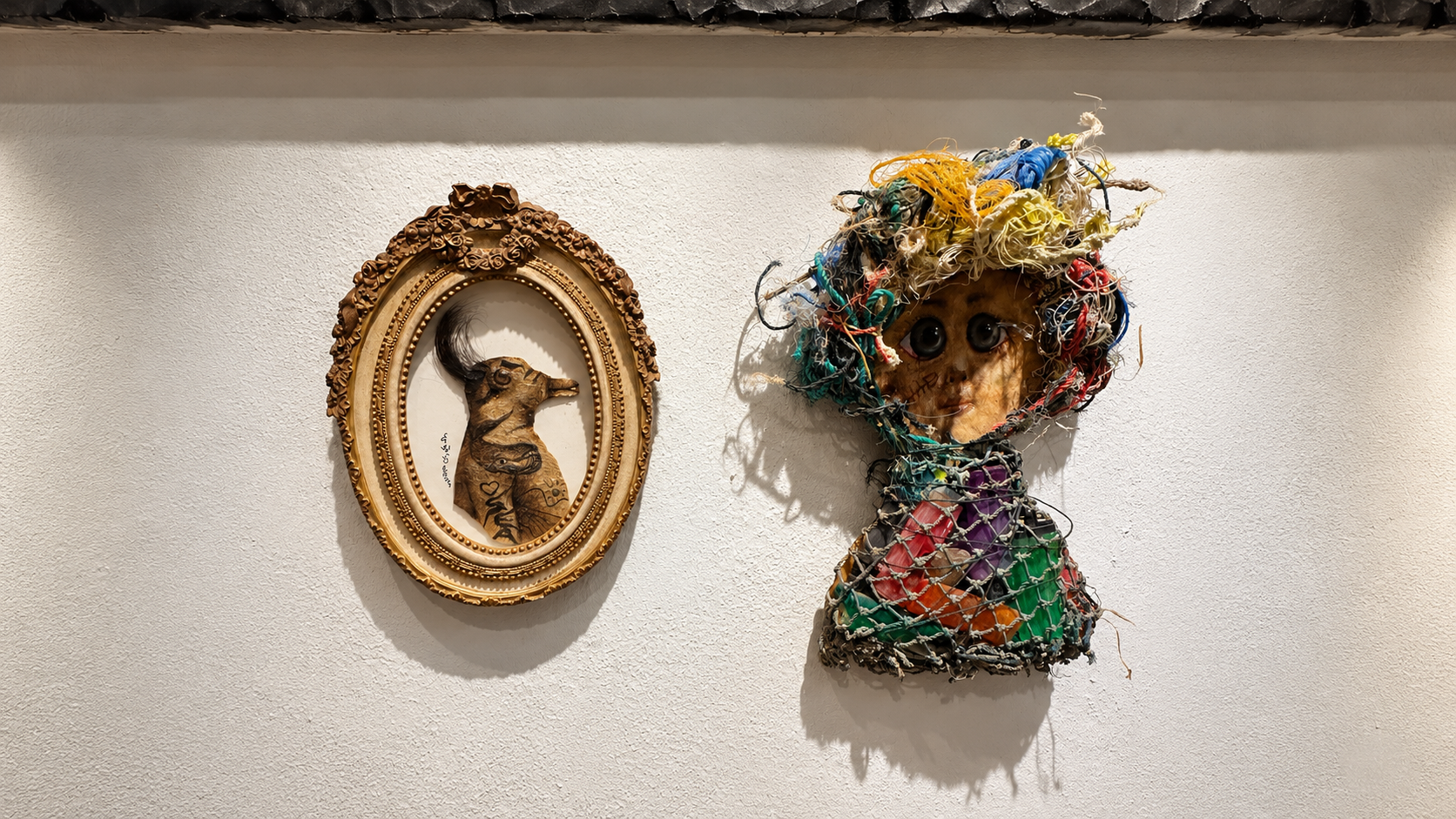
Somrakyen (Yen): Unexpected Materials, Unusual Stories
Another artist whose work deserves attention is Somrakyen, known as Yen.
Yen’s work takes the idea of giving materials a second life in a different direction. He brings together elements such as cardboard, stones, metal plates, fishing ropes and other materials to create expressive, sometimes surprising compositions.
His pieces can be unusual, humorous, slightly mysterious or even a little unsettling. Faces emerge from unexpected surfaces. Familiar objects become parts of figures and characters. Materials that might normally be overlooked become essential details in a work of art.
You may find yourself looking at a piece and wondering what it was before the artist transformed it.
That is one of the pleasures of discovering this kind of art. You aren’t simply looking at an object; you are seeing how someone else’s imagination works.
Yen’s creations also remind us that art doesn’t have to begin with a blank canvas or expensive materials. Creativity can start with whatever is available, provided someone is willing to look at it differently.
I find that idea particularly relevant today, when we are surrounded by products designed to be bought, used and replaced. Yen’s work offers another perspective: an object doesn’t necessarily lose its value just because it has lost its original purpose.
In the hands of an artist, it may become something entirely different.
Supporting Local Artists Is Part of the Solution
It is easy to talk about protecting the environment, but the choices we make in everyday life matter too.
Buying a piece of art made using reclaimed or discarded materials is not a complete solution to waste, of course. But it can be one small, positive choice — especially when it also supports a local artist.
When you buy directly from an artist, you help make it possible for that person to continue creating. You support their time, skill, imagination and livelihood.
For local residents, that might mean choosing an original piece to decorate a home, café, restaurant or business rather than buying another mass-produced decoration.
For visitors, it could mean bringing home a piece of Phuket that has a genuine connection to the place. Instead of choosing a souvenir made in large quantities, you can take home something created by an artist working right here in Rawai.
And when local cafés and businesses display and purchase art from artists in the village, they help keep that creative community visible and active.
These choices are small, but they help create a connection between the artist, the buyer and the place where the work was made.
That is something I believe is worth supporting.
A Different Kind of Souvenir from Phuket
When I think about souvenirs, I always come back to the idea of a story.
A mass-produced object might remind you that you visited Phuket. But an original artwork can remind you of a particular afternoon, a conversation with an artist, or the moment you discovered something unexpected in a small creative village in Rawai.
Imagine taking home one of Niran’s colourful wooden fish or a character assembled from reclaimed materials. When someone asks you about it, you can explain where you found it and who made it.
The object becomes more than a decoration. It carries a memory of the place, the artist and the discovery.
Of course, not every artwork will suit every home, and that is part of the experience. Some pieces are bold and colourful. Others are quirky, unusual or full of character. You have to find the one that speaks to you.
You might even discover that the piece you remember most from your trip isn’t a conventional souvenir at all.
Why Phuket Art Village Matters to Rawai
For me, the value of Phuket Art Village goes beyond the individual artworks.
It brings together people who make things differently. Artists work with their own ideas, materials and techniques. Visitors can discover work they might never encounter in a conventional shop. Local businesses can support artists and give their spaces a more personal identity.
That creative exchange is important.
A village like this offers an alternative to a world of identical products. It gives people a reason to slow down, look around, speak to artists and consider the story behind what they buy.
It also gives us an opportunity to think about the materials we use and discard. Not everything can be reused, and not every material is suitable for every project. But artists show us that there is often more potential in an object than we first imagine.
I think that is a valuable message for both residents and tourists.
You don’t need to make a grand gesture to support a more thoughtful way of living. Sometimes it begins with choosing to buy something made by a local artist, recommending their work to a friend, or encouraging a café to display original art.
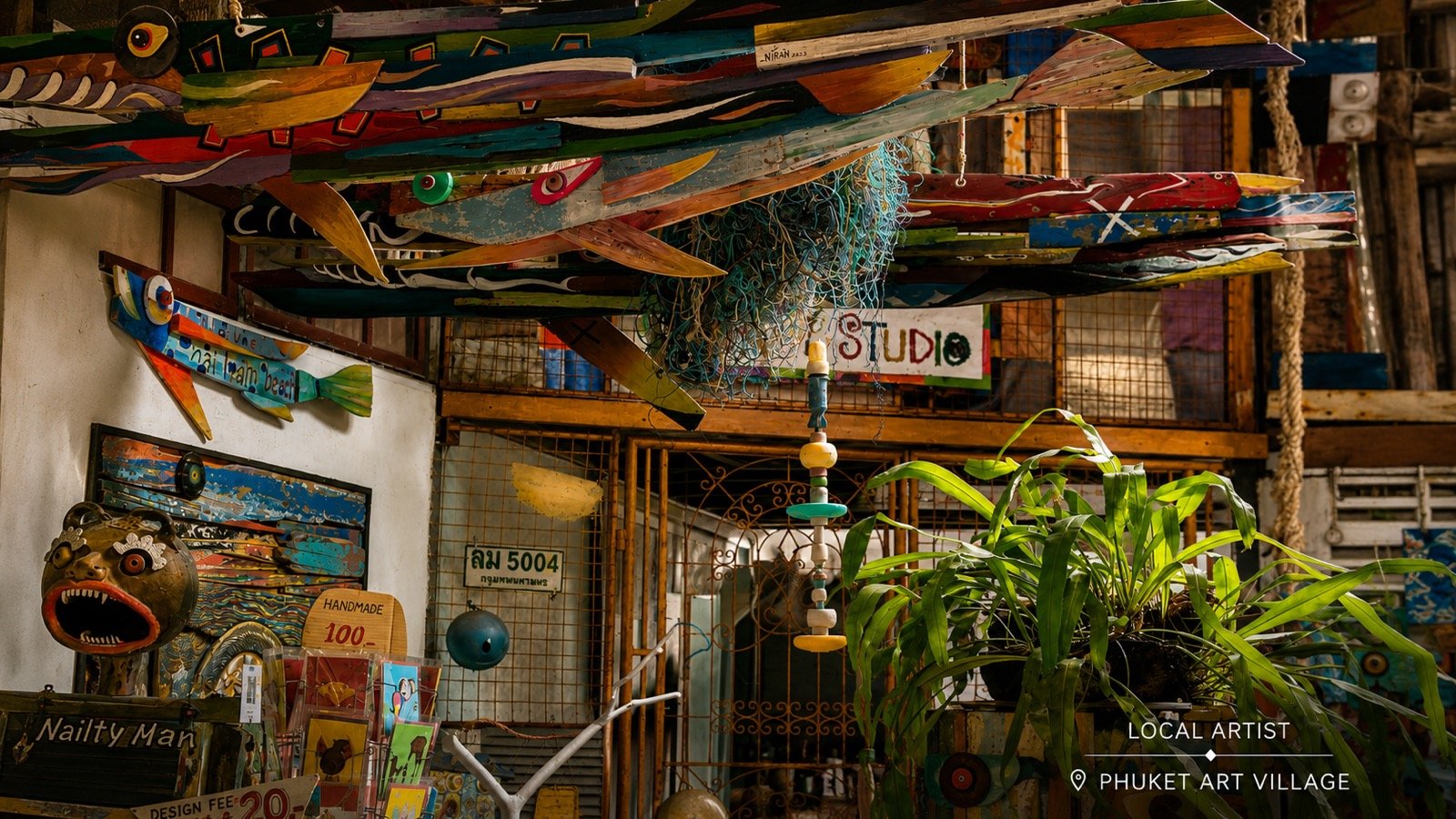
Visit Phuket Art Village and Discover the Artists
If you are in Rawai, I encourage you to explore Phuket Art Village with an open mind.
Take your time looking at the artworks. Notice the materials, the colours and the details. Ask about the artists and how they make their pieces. If something catches your attention, find out whether it is available to buy.
You might discover Niran’s colourful sculptures, Yen’s unexpected compositions, or another artist whose work speaks to you in a completely different way.
And if you live in Phuket, consider visiting too. This isn’t only a place for tourists. Local residents can play an important role in supporting the artists who make our village such an interesting place to live and work.
Every purchase is a way of supporting someone’s creativity and helping keep original art part of our everyday surroundings.
I make jewellery at Phuket Art Village myself, so perhaps I am naturally drawn to people who transform materials into something personal. I know how much thought and work can go into making an object by hand.
But even if you don’t make art yourself, you can be part of this creative community simply by taking an interest in it.
The next time you’re looking for something to bring home from Phuket, think beyond the usual souvenir shops. Look for a piece with a story. Meet the person who made it. Choose something that you genuinely love.
You may leave with more than an original work of art. You may also leave knowing that your purchase helped support a local artist and gave a second life to materials that might otherwise have been discarded.
And that feels like a much more meaningful way to remember Phuket.
Continue Exploring Phuket